
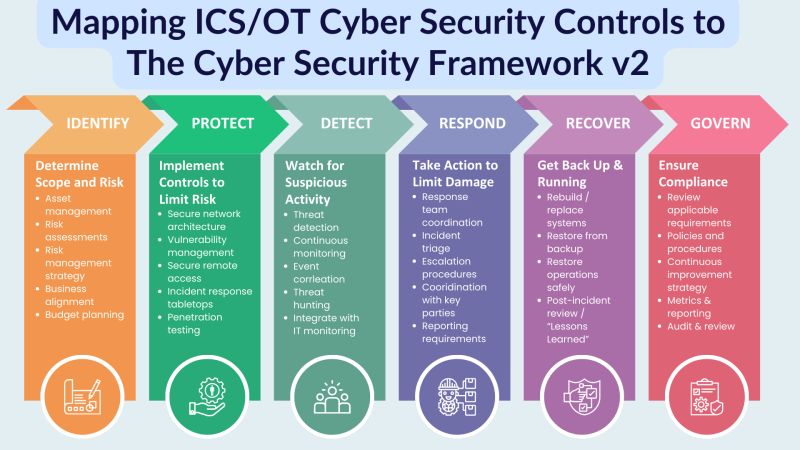
Operational Technology (OT) cyber security is a complex and critical task, whether you are a Chief Information Security Officer (CISO), OT Security Manager, or a security engineer responsible for defending critical OT assets, data, and infrastructure against advanced threats. Security frameworks can provide essential guidance.
Focus Areas: Identifying which aspects of cyber security to prioritize can be challenging. Balancing protection of assets, data, and infrastructure requires a strategic approach. Regulatory Compliance: Navigating an increasing number of regulations demands meticulous attention and resources. Ensuring compliance while managing day-to-day security operations can strain limited resources. Proactive Stance: Staying ahead of potential threats necessitates a proactive approach. Limited time and resources make it difficult to maintain continuous vigilance and responsiveness.
Security frameworks act as a “compass,” guiding you through your OT cyber security and compliance journey. They offer structured and comprehensive approaches to managing and improving your security posture.
Guidance and Direction: Frameworks provide a clear roadmap for addressing various aspects of cyber security. They help prioritize actions and resources effectively, ensuring critical areas are covered. Regulatory Alignment: Frameworks often align with industry regulations, aiding in compliance efforts. Using a recognized framework can simplify the process of meeting regulatory requirements.
Proactive Security Posture: Implementing a framework encourages a proactive stance on cyber security. Regular assessments and updates as per the framework help in anticipating and mitigating threats. Resource Optimization: Frameworks help maximize the impact of limited resources by focusing on high-risk areas. They facilitate efficient use of time and personnel, ensuring key security measures are implemented effectively.
NIST Cybersecurity Framework (CSF): Provides a comprehensive set of guidelines and best practices for managing cyber security risk. ISO/IEC 27001: Offers a systematic approach to managing sensitive company information, ensuring it remains secure.
CIS Controls: A set of recommended actions to protect and defend against cyber threats. ISA/IEC 62443: Specifically designed for industrial automation and control systems, addressing OT security needs.
Deploying an Operational Technology Cyber Security Framework (OT-CSF) eliminates the guesswork in securing OT assets. These frameworks provide cyber security managers with a reliable, standardized, and systematic approach to mitigating cyber risk, regardless of the OT environment’s complexity.
Strategic Planning: Offers a strategic and well-thought-out plan to protect OT assets, infrastructure, and data. Provides a structured approach to addressing cyber security challenges. Guidance and Adaptability: Offers guidance to security leaders, enabling intelligent management of cyber risks. Allows organizations to adapt and adjust existing well-known frameworks to meet specific needs, including compliance with commercial or government regulations.
Simplified Compliance: Helps organizations follow standard cyber security practices, making compliance easier and smarter. Ensures adherence to correct security procedures, providing tangible risk reduction.

By producing quality and innovative products, this company has greatly contributed to the growth and development of the technology industry in Hong Kong and the Asian region. Also, this company has boosted Hong Kong's economy by creating job and investment opportunities.
All Rights Reserved By PowerTech©